The Crackling History Of Christmas Bonbons
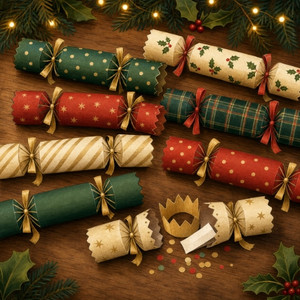
Few Christmas table traditions create such instant laughter as a bonbon. Two people pull, the paper snaps apart with a crack, and out tumble a crown, a joke and a small surprise. In Australia they are generally called bonbons, while in Britain they are better known as Christmas crackers.
Browse the Christmas crackers and bonbons collection to find colours and designs that suit your table.
From Wrapped Sweets To Christmas Crackers
The story is commonly traced to London confectioner Tom Smith. After seeing French bonbons wrapped in decorative paper, he began selling sweets with messages inside their wrappers. The idea developed further when a snapping mechanism was added, giving the package its distinctive crack when pulled apart.
The cracker gradually grew beyond its confectionery origins. Paper hats, mottos, riddles, jokes and small gifts became part of the experience, creating the familiar table tradition enjoyed today.
Why Do Bonbons Contain Paper Crowns?
The paper crown is thought to have been introduced as the cracker evolved under the Smith family. Whatever its precise inspiration, wearing the crown has become part of the fun because it gives everyone at the table permission to look a little ridiculous together.
The jokes serve a similar purpose. Their deliberately simple punchlines are less about comedy and more about creating a shared moment of laughter.
How Bonbons Became An Australian Tradition
Christmas crackers spread through Britain and many Commonwealth countries, becoming especially well suited to long family lunches and festive gatherings. In Australia, the snap of the bonbon is now closely associated with Christmas tables, paper crowns and the reading of jokes between courses.
Modern bonbons range from traditional paper crackers to elaborate sets containing games, keepsakes or more substantial gifts. Colours and finishes have also become part of table styling.
Choose Bonbons For Your Table
- Match one of the cracker colours to the table runner, napkins or centrepiece.
- Choose a contrasting metallic finish to add sparkle.
- Check the pack size against the number of place settings.
- Consider the age and interests of guests when selecting the contents.
- Place one above each plate or arrange them in a decorative bowl.
Coordinate your choice with tableware and entertaining pieces from Christmas party and homewares.
Make Your Own Christmas Bonbons
Homemade bonbons allow you to personalise the colours and gifts. Use sturdy cardboard tubes, decorative paper, ribbon, paper crowns, jokes and suitable small surprises. Purpose-made cracker snaps are available from craft suppliers.
- Cut the paper wide enough to wrap the tube with extra length at both ends.
- Position the snap through the centre and secure it as directed.
- Wrap and secure the tube, then gently tie one end.
- Add the crown, joke and gift through the open end.
- Tie the second end and finish with names or decorative details.
Choose contents carefully and avoid small parts where young children are present.
Frequently Asked Questions
Are bonbons and Christmas crackers the same thing?
Yes. The terms describe the same pull-apart Christmas table tradition, although usage varies between countries.
Who invented the Christmas cracker?
The invention is generally credited to London confectioner Tom Smith, whose wrapped sweets and messages evolved into snapping crackers.
When should bonbons be pulled?
They are often pulled when guests sit down or between courses, but every family can make its own tradition.
Add A Little Crackle To Christmas Lunch
Whether elegant, traditional or wonderfully silly, bonbons bring colour and shared laughter to the table. Choose a set from Christmas Elves that complements your celebration and prepare for the inevitable parade of paper crowns and cheerful groans.