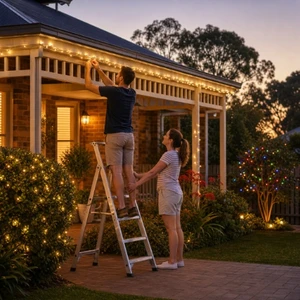
How To Hang Outdoor Christmas Lights Safely And Beautifully
Outdoor Christmas lights can transform the front of a home into a warm and welcoming festive display. Whether you want a simple line of lights along the verandah or a brighter arrangement across the garden, the best results begin with careful planning.
Before opening the ladder or unrolling a cable, walk around the property and decide which features deserve attention. Rooflines, windows, trees, shrubs, fences and pathways each suit different styles of lighting. A clear plan will help you buy the right amount, reduce visible cables and create a display that feels balanced rather than crowded.
Explore the complete Christmas lights collection before you begin so you can compare the colours, lengths and lighting styles available.
Plan The Display Before Buying Lights
Start with a rough sketch or a photograph of the front of your home. Mark the areas you want to illuminate, the location of suitable power sources and any spaces that should remain clear.
- Measure rooflines, eaves, windows, fences and garden beds instead of estimating.
- Allow extra length for reaching the power source and following corners.
- Choose one main focal point, such as the entrance, roofline or a large tree.
- Plan where transformers, controllers and connectors will be positioned.
- Keep cable routes away from doors, windows, walkways, driveways and wet areas.
- Check the manufacturer’s limit before joining connectable light sets.
Stand across the street or at the end of the driveway and consider how the whole display will look. Concentrating light around a few architectural features often creates more impact than covering every available surface.
Choose The Right Outdoor Christmas Lights
Different lights perform different jobs, so match each style to the surface you are decorating.
- Fairy lights: Flexible strands for wrapping tree trunks, following railings, outlining windows and weaving through greenery.
- Icicle lights: Cascading drops that suit eaves, verandahs, balconies and long fence lines.
- Net lights: An efficient way to cover shrubs and hedges with evenly spaced light.
- Rope lights and displays: Useful for defining pathways, garden edges and architectural shapes.
- Solar-powered lights: A practical choice for sunny garden areas that are away from a suitable power point.
- Curtain and waterfall lights: Create a dense illuminated backdrop across walls, balconies or covered entertaining areas.
Only use products that are specifically suitable for the intended location. An indoor light should never be used outside, even for a short period.
Select A Colour Scheme
Colour has a strong influence on the overall character of the display. Warm white lights create a soft and traditional glow, while crisp white gives rooflines and modern homes a clean finish. Multi-coloured lights feel playful and nostalgic, particularly around trees, garden beds and family entertaining spaces.
For a coordinated result, repeat the same colour in several places. For example, carry warm white lights from the roofline to a nearby tree and then towards the front entrance. If you prefer multiple colours, use them deliberately rather than introducing a different colour on every surface.
Test And Inspect Every Light Set
Untangle and test the lights on the ground before installation. This is far easier than discovering a fault after the strand has been secured above a window or along the roofline.
- Inspect plugs, cables, lamp holders, connectors and transformers for damage.
- Do not use lights with exposed wires, cracked insulation or loose fittings.
- Confirm that each product is approved for outdoor use.
- Check older products against current Australian safety requirements and product recalls.
- Make sure all required caps, seals and weatherproof connection covers are present.
- Replace damaged products rather than attempting an unauthorised repair or modification.
Check The Outdoor Rating And Australian Compliance
Outdoor Christmas lights have an IP rating that indicates their level of weather resistance. Energy Safe Victoria advises that outdoor electrical equipment must have a rating of at least IP23. Some products may be suitable outdoors while still requiring the transformer or plug to remain indoors, so always follow the instructions supplied with that particular light set.
Plug-in lights and powered decorations sold in Australia should carry the Regulatory Compliance Mark, commonly called the RCM. Buy from a reputable Australian retailer and avoid electrical products that do not provide clear compliance and installation information.
Use Safe Fixings Instead Of Nails Or Staples
Use purpose-made light clips, hooks or cable ties that support the strand without piercing, crushing or sharply bending the cable. Match the fixing to the surface and the type of light being installed.
Space clips closely enough to stop the lights sagging or moving excessively in the wind. Do not pull a strand tight; a small amount of natural movement reduces strain on the cable and connectors.
Avoid fixing lights to gutters, flashing or roofing materials in a way that may cause damage. If the display requires working on the roof, reaching near overhead electrical lines or accessing an unsafe height, use an appropriately qualified professional.
Work Carefully With Ladders
- Install lights during daylight when cables and fixing points are easy to see.
- Place the ladder on firm, level ground and follow its safety instructions.
- Ask another adult to assist and stabilise the ladder where appropriate.
- Keep your body centred between the ladder rails instead of leaning sideways.
- Climb down and reposition the ladder whenever the next section is out of reach.
- Keep tools and loose cables organised so they do not create a trip hazard.
Connect Outdoor Lights Safely
Electricity and wet outdoor conditions require extra care. Energy Safe Victoria recommends testing safety switches, using overload-protected powerboards, fully unwinding extension leads and ensuring every outdoor electrical connection is weatherproof.
- Switch the power off while installing, adjusting or removing lights.
- Use a circuit protected by a working safety switch.
- Never piggyback plugs or overload a power point or powerboard.
- Use factory-made extension leads suitable for the intended location.
- Keep transformers, powerboards and connections positioned exactly as instructed.
- Do not run electrical leads through doors or windows where they may be crushed.
- Keep lighting and leads away from pools, sprinklers, wet ground and areas where water can collect.
- Never run cables across a walkway or driveway where they may be damaged.
Highlight The Best Features Of Your Home
A strong display usually combines one clear outline with several smaller accents. Use icicle or fairy lights along the eaves, then repeat the same colour around the front door or a nearby tree. Net lights can add an even glow to shrubs, while solar lights can guide attention through a garden bed or towards the entrance.
Windows look inviting when framed neatly, but avoid passing cables through the opening. On trees, wrap the trunk first and work upwards, keeping strands away from branches that may rub against or damage the cable.
Check the display from several angles before completing the installation. A small adjustment to spacing or colour can make the finished arrangement feel much more deliberate.
Use Timers And Light Settings Thoughtfully
A timer makes the display easier to manage and ensures the lights operate for consistent hours. Choose a steady or gentle twinkle for an elegant home, or use more animated settings around a playful family display.
Energy Safe Victoria advises turning decorative lights off before going to bed or leaving the property. Lights should also be switched off during poor weather, particularly when strong winds or storms may damage the display.
Remove And Store Lights Carefully
Take lights down in daylight and switch off the power before disconnecting anything. Release each clip rather than pulling on the wire, then inspect the set as it is removed.
Allow outdoor lights to dry completely before storage. Wind each strand loosely around a reel or piece of sturdy cardboard, keep accessories with their matching lights and label the container with the location or colour. Careful storage makes the next installation quicker and protects the cables from tangles and damage.
Frequently Asked Questions
Can indoor Christmas lights be used outside temporarily?
No. Only use lights, extension leads and connections that are specifically approved for outdoor conditions.
What IP rating should outdoor Christmas lights have?
Energy Safe Victoria advises that outdoor electrical equipment must have a rating of at least IP23. Always follow the individual product instructions because transformers and connections may have different placement requirements.
What is the safest way to attach lights to a roofline?
Use purpose-made clips that suit the light and surface. Do not pierce cables with nails or staples, and do not work from an unsafe height or climb onto a roof without the appropriate skills and equipment.
Should outdoor Christmas lights stay on overnight?
No. Turn decorative lights off before going to bed or leaving the house, and switch them off during poor weather.
What should I do with damaged Christmas lights?
Stop using them. Do not modify or attempt an unauthorised electrical repair. Replace the set or have it assessed by a licensed electrical contractor.
Bring Your Outdoor Christmas Display To Life
With a measured plan, suitable outdoor products and careful installation, Christmas lights can make a home feel welcoming from the street to the front door. Browse outdoor Christmas lighting at Christmas Elves and choose a coordinated mix of fairy, icicle, net, rope or solar lights for your display.
For current electrical-safety information, refer to the Energy Safe Victoria Christmas light safety guide.